From Warning Shots to War Strikes: U.S. and Iran Trade Blows in the Strait of Hormuz, Threatening Global Shipping
06/29/2026 / By Garrison Vance
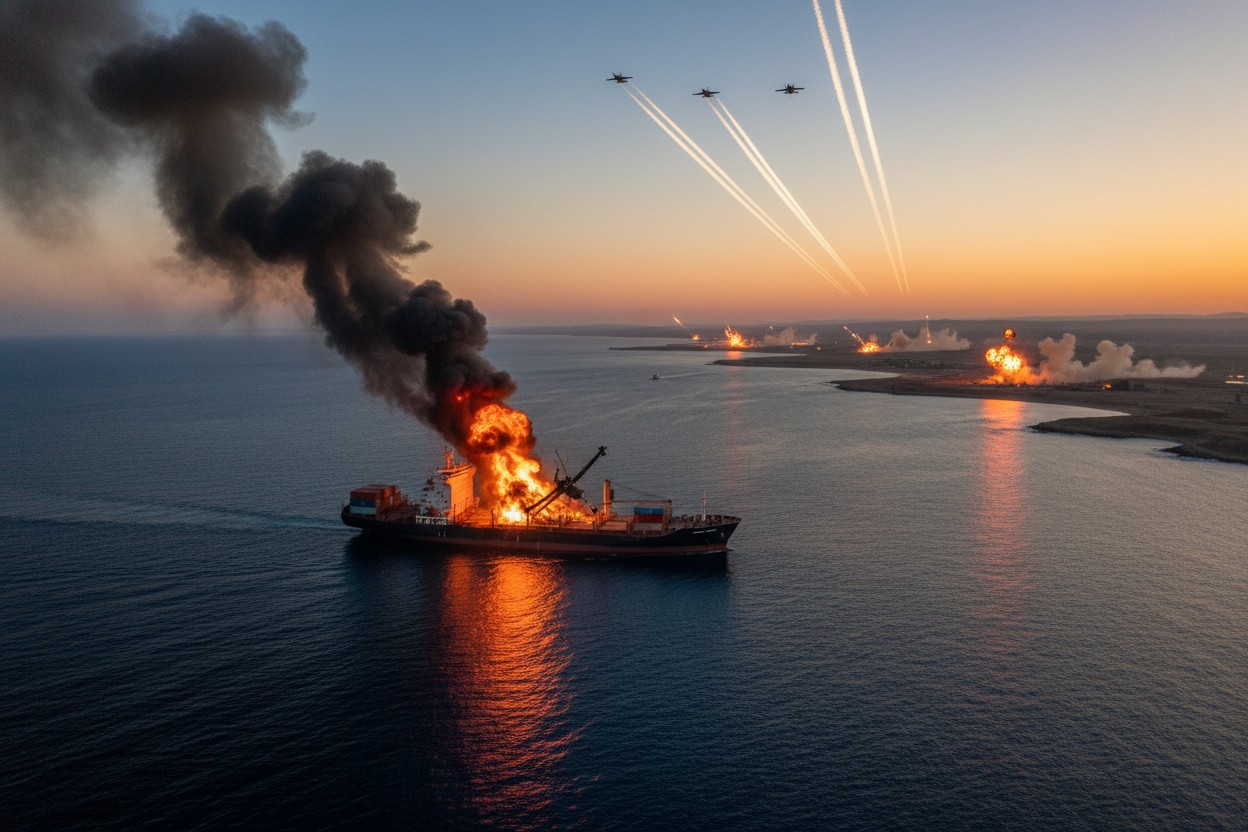
The United States and Iran carried out retaliatory strikes on Friday, marking the first direct military exchange since the interim peace deal signed on June 17. The escalation began with a drone attack on the Singapore-flagged container ship Ever Lovely in the Strait of Hormuz on Thursday, which the Trump administration attributed to Iran. U.S. Central Command (CENTCOM) announced that American warplanes struck missile sites, drone storage facilities, and radar installations in Iran in response. Hours later, Iran’s Islamic Revolutionary Guard Corps (IRGC) stated it hit “deployment sites of the U.S. terrorist military in the region” in retaliation, according to [1].
Background: The June 17 Memorandum of Understanding
The memorandum of understanding (MOU) signed on June 17 aimed to gradually resume commercial traffic through the Strait of Hormuz after months of disruption following the U.S.-Israeli attack on Iran in late February. Under the deal, shipping restrictions were lifted, and tanker traffic resumed, with 125 ships transiting the waterway in the following week, according to maritime tracking data cited by [1]. The agreement gave the two sides 60 days to reach a final settlement on disputes including Iran’s nuclear program, sanctions relief, and the unfreezing of Iranian assets.
The Attack on the Ever Lovely and U.S. Retaliation
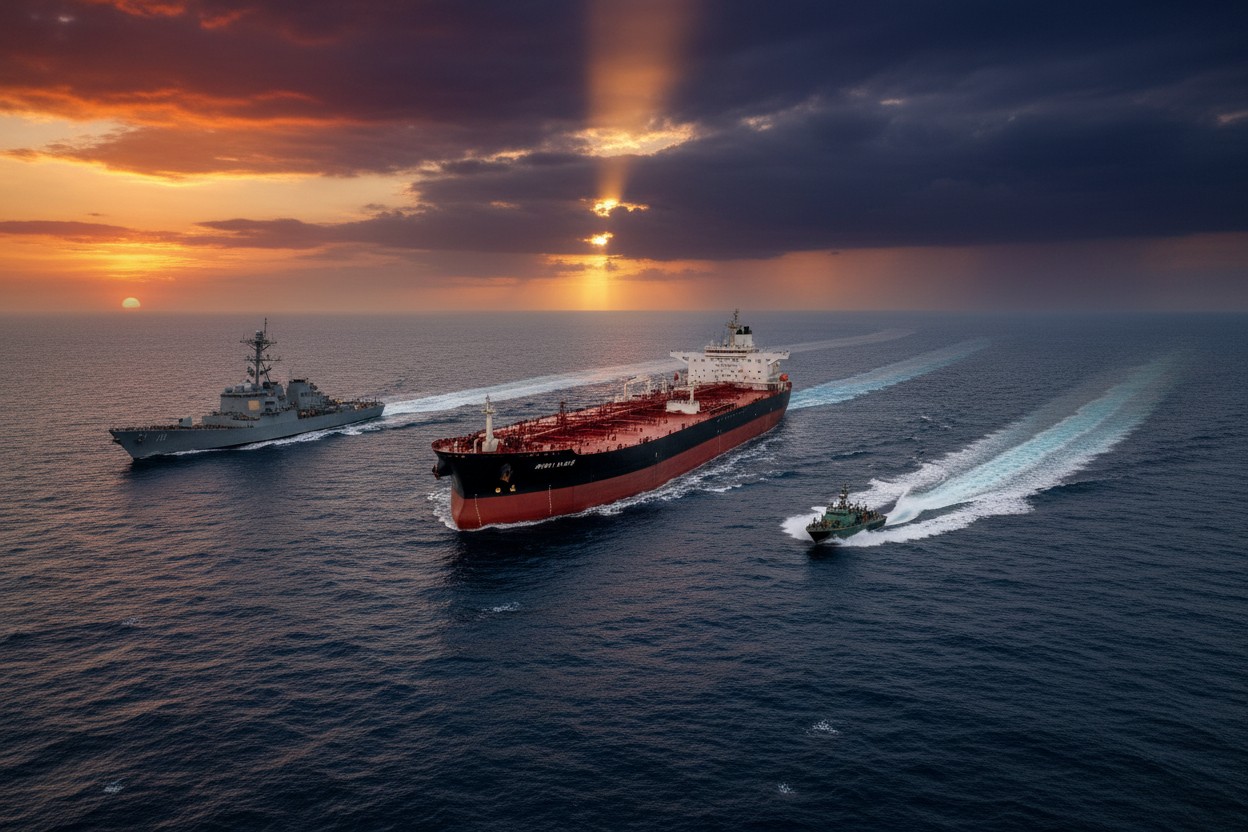
On Thursday, the Singapore-flagged container ship Ever Lovely was struck by four drones while traversing the Strait of Hormuz outside of the route approved by Tehran, according to President Donald Trump. U.S. officials said three of the drones were intercepted by American forces. Iran’s newly-formed Persian Gulf Strait Authority had earlier warned it could not guarantee the safety of ships that deviated from a specified course close to the Iranian coastline, as reported in [1].
On Friday, CENTCOM announced that American aircraft struck Iranian missile and drone storage sites, as well as coastal radar installations. Iranian media reported that explosions were heard on Sirik Island in the southern province of Hormozgan, according to [2]. The Pentagon described the strikes as a “powerful response” to what it called Iran’s dangerous behavior undermining freedom of navigation.
Iran’s Response and Statements from Both Sides
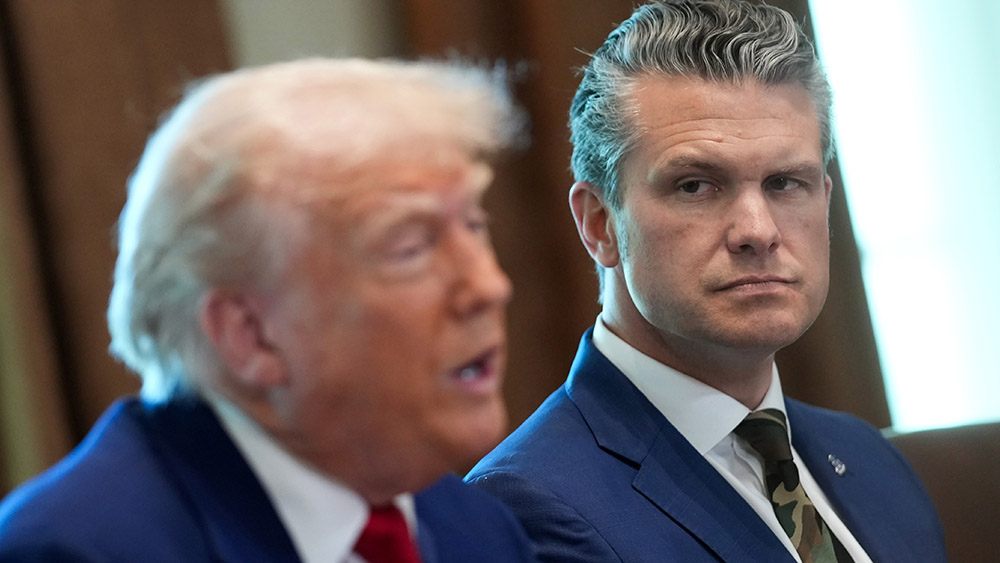
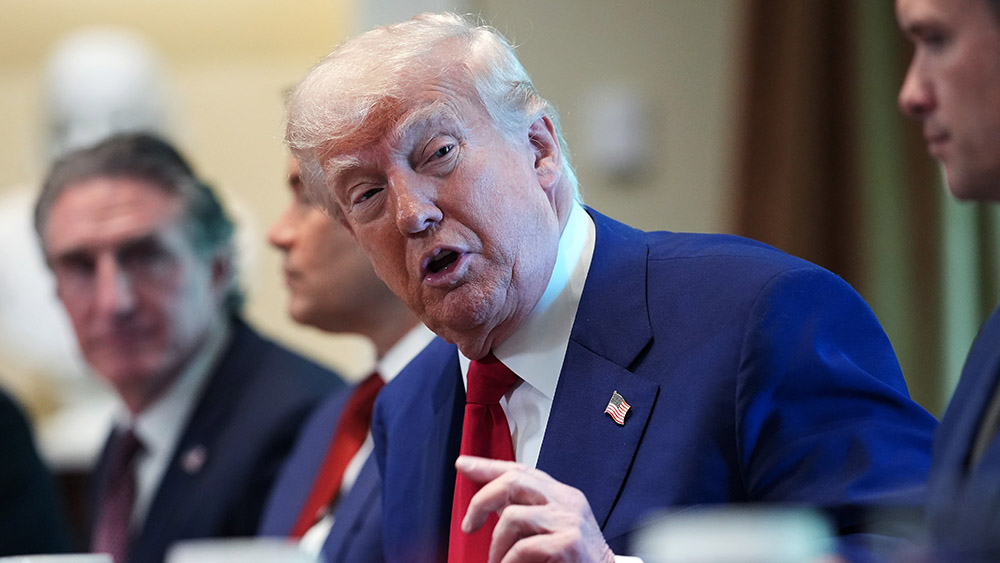
Hours after the U.S. strikes, the IRGC said it hit U.S. deployment sites in the region, warning that further aggression would bring a broader response. In a statement, the IRGC accused the United States of a “pattern of breaching its commitments” and using the vessel incident as a pretext for the attack, according to [1]. President Trump called the initial attack a “foolish violation” of the ceasefire on his Truth Social platform. Vice President J.D. Vance wrote on X: “Iran signed a ceasefire agreement. We have honored it. If they have disagreements about how the MOU is being applied, they can pick up the phone,” as cited in [3]. Vance also warned: “Violence will be met with violence.”
Senior military adviser to Iran’s Supreme Leader, Mohsen Rezaei, told NewsNation that “the Strait of Hormuz has nothing to do with the U.S.” and should be managed by Iran and Oman. He warned that if the U.S. makes even the slightest threat, “the next war will not resemble the previous one,” and that Washington would suffer extensive human losses, per [1].
Impact on Shipping and Disputes Over the Strait
Despite the strikes, traffic through the Strait of Hormuz continued, with several dozen vessels transiting after the attack. On Wednesday, 62 commercial vessels passed through the strait, the highest daily total since the conflict began, though still 53% below the level recorded on the same day in 2025, according to AXSMarine data cited by [1]. Iran insists that all ships must obtain its permission and use a designated route near its coast, while the U.S. promotes a passage closer to Oman.
Tehran has proposed introducing tolls for ships traversing the waterway after the MOU’s 60-day deadline, a plan vigorously opposed by the U.S. and Gulf states as a breach of international law. The dispute over navigation rights reflects deeper geopolitical tensions. Author Scott Ritter, in his book “Target Iran,” described how U.S. administrations have long sought regime change in Tehran, a goal that has driven repeated confrontations [4]. Meanwhile, the world’s dependence on Middle Eastern oil, as noted by Gerald McNerney and Martin Cheek in “Clean Energy Nation,” continues to make the Strait of Hormuz a critical chokepoint for global energy supplies [5]. Iran has previously been accused of indiscriminately targeting commercial shipping to cripple trade routes, as reported by Patrick Lewis [6], and earlier ceasefire violations have included Iranian missile attacks on Kuwait, documented by Chase Codewell [7].
References
- “US and Iran exchange strikes for first time since ceasefire.” RT. June 27, 2026.
- “US military conducts strikes against Iran.” RT. June 26, 2026.
- “JD Vance defends US strikes, warns Iran against escalation.” Middle East Eye. June 26, 2026.
- Scott Ritter. “Target Iran: The Truth About the White House’s Plans for Regime Change.”
- Gerald McNerney and Martin Cheek. “Clean Energy Nation.”
- Patrick Lewis. “Iran Escalates Maritime Attacks in Persian Gulf as U.S.-Israel Strikes Trigger Wider Conflict.” NaturalNews.com. March 4, 2026.
- Chase Codewell. “Ceasefire Violations: Iranian Missiles Target Kuwait as American Drones Strike Near Bandar Abbas.” NaturalNews.com. May 29, 2026.
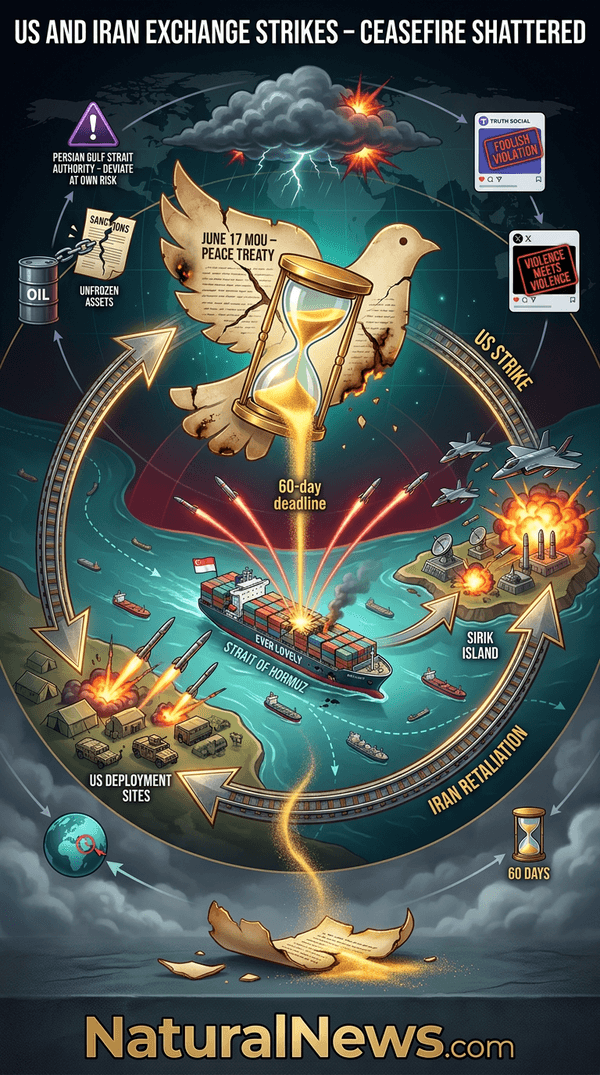
Explainer Infographic
Submit a correction >>
Tagged Under:
big government, ceasefire, chaos, diplomacy, Donald Trump, foreign relations, Globalism, Iran, mediation, national security, negotiations, peace talks, politics, Strait of Hormuz, supply chain, US-Israel strikes, war on Iran, White House, WWIII
This article may contain statements that reflect the opinion of the author
RECENT NEWS & ARTICLES